
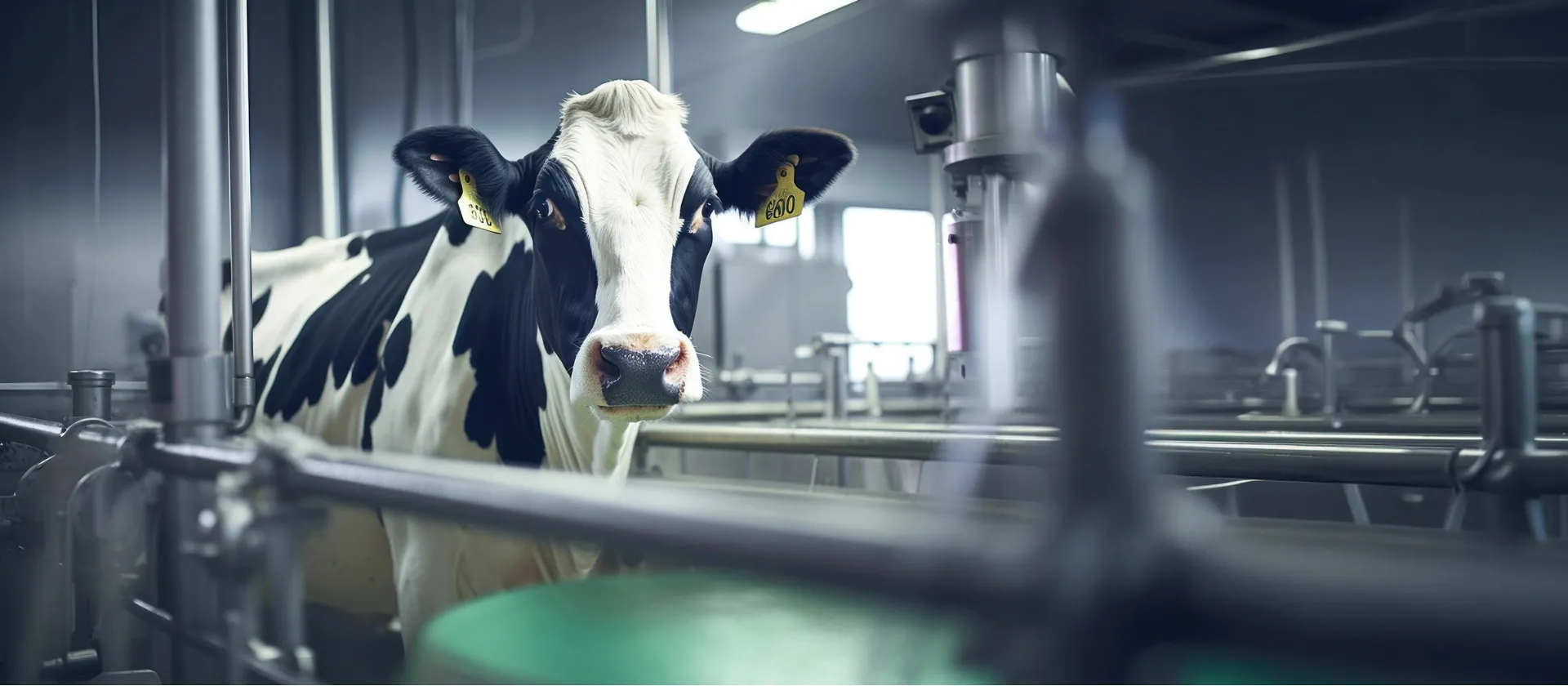

Lowering dairy carbon emissions requires operational visibility into the processes, movements, and decisions that shape them.
Tell us if you’ve heard this one: You have to streamline your operations while reducing environmental impacts without increasing costs, disrupting production, or compromising product quality. Every time you pull a lever — improving sustainability for example — it affects other things like transportation, processing efficiency, sourcing, and profitability. That’s when you realize sustainability has become an operational challenge.
The achievement of your environmental goals depends on detailed operational data that helps you understand where your emissions originate and which process changes will deliver measurable improvements without sacrificing throughput or margins. Since raw milk production is the biggest source of carbon emissions, you should know where it comes from, how it’s transported, and how it moves through your operations.
The journey of raw milk from farm to table seems simple enough: Milk is collected, quality-checked, separated, and processed. But each stage contributes to a complex network of carbon emissions and resource consumption. For example, trucks crisscross rural roads collecting millions of liters of milk each day, while processing facilities consume significant amounts of energy during pasteurization, separation, packaging, and storage. Every step leaves an environmental footprint that must be understood before it can be reduced.
What’s Necessary?
Transparency is crucial for meaningful sustainability improvements. SAP Dairy Management captures environmental data throughout production, including water consumption at the farm, transportation emissions, processing energy usage, and waste generated across the supply chain. And through multilevel bills of materials, SAP Dairy Management provides a detailed understanding of each product's environmental impact by connecting subcomponents and ingredients to finished products. This visibility lets you identify inefficiencies and prioritize targeted improvements.
Beyond data collection, transforming operational information into actionable insights requires advanced analysis. SAP Profitability and Performance Management (SAP PaPM) enables you to calculate carbon footprints with greater precision by combining operational data with emission factors and allocation models. The result is a detailed view of emissions associated with individual products and processes that lets you evaluate operational alternatives, improve efficiency, and enhance your operations with measurable sustainability metrics.
What’s the Outcome?
Together, SAP Dairy Management and PaPM give you the visibility and the analytical capabilities you need to make informed sustainability decisions. By integrating operational data with advanced performance modeling, you’ll better understand your environmental effects, even as you optimize production and help to create a more sustainable future.
It’s hard to imagine a better outcome than that.